

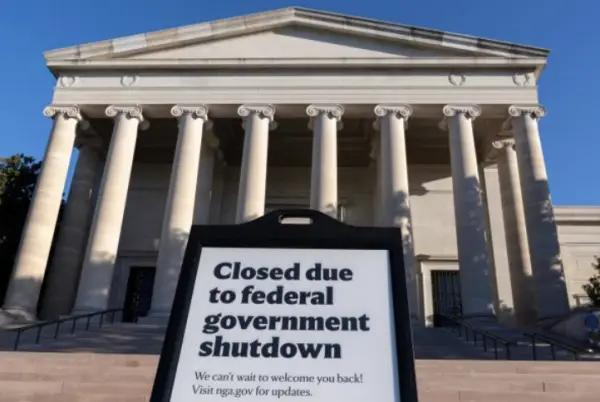
Washington D.C. lawmakers scramble as flights are cancelled left and right, federal workers are unpaid and lacking vital benefits, and millions of Americans are unsure about receiving governmental benefits. Starting on October 1, 2025, the United States achieved a new record, but not one that anyone wanted. Spanning 43 days, the longest-ever government shutdown in U.S. history wreaked havoc nationwide, particularly in government programs and agencies such as the Supplemental Nutrition Assistance Program (SNAP), Transportation Security Administration (TSA), and National Park Service (NPS).
Many have heard about the negative effects unleashed by this unprecedented shutdown, but how did we reach this dilemma? In the United States government, both chambers of Congress must pass appropriation legislation to fund the federal government for the upcoming fiscal year. In recent years, with rising political polarization, it has become increasingly rare for all of Congress to approve all twelve appropriation bills by the time that has traditionally kept the government funded through each fiscal year. Instead, it is more common for Congress to pass temporary funding in the form of “continuing resolutions.” This fall, the House of Representatives passed a continuing resolution to prevent a shutdown, but the Senate experienced rampant resistance. Democrats refused to vote to pass the bill without it guaranteeing temporary extensions on the expiring tax credits of the Affordable Care Act – credits which would lead to cheaper healthcare insurance for US citizens. With this inability to reach the required 60 votes, the first government shutdown in nearly seven years began. In the early days of the shutdown, initial predictions included government workers being furloughed, or working without pay, travel disruption, and economic collapse. As each day passed, the nation began to see the impact. One of the first prevailing issues was in the Federal Aviation Administration, or FAA, causing many to work without pay and flights being canceled quickly. With an abundance of air traffic control workers being left without pay due to the shutdown, forty of our nation’s airports were forced to implement these cancellations.
In addition to issues in transportation and flight, government agencies were all affected in various ways, such as national parks and museums. From Smithsonian Museums to Yellowstone National Park to the National Zoo, government funded attractions were forced to temporarily shut down or limit their access due to unpaid workers. Throughout the nation, these smaller government sectors faced extreme detriment for these 43 days, affecting tourism and the economy.
Although all of the affected aspects of the government shutdown were damaging, potentially the worst byproduct of this disaster was the reduced SNAP benefits. SNAP is a program that provides low-income families with a budget for food and groceries to supplement their day to day nutrition. With innumerable citizens across the country relying on these benefits to remain fed and healthy, the government shutdown’s had destructive consequences on this vital agency across the nation.
All of this occurred during this temporary lapse in funding, leading to many government-funded operations being temporarily shut down, while Congress continuously worked to pass a spending bill. The shutdown finally came to a close on November 12, 2025, after the record-breaking 43 days, with six Democrats joining Republicans to approve a new bill with a 222 to 209 vote. Following the termination of the government shutdown, flight restrictions are being lifted, federal workers are being paid, people relying on SNAP benefits are seeing relief, and many other affected aspects of this shutdown are once again seeing normality. Although it is impossible for everything to quickly revert back to normal after such a paralyzing event, attention has now shifted towards rebuilding and boosting efficiency in those affected government agencies However, the prevalence of such significant consequences due to this government shutdown highlighted the important role government funding plays in everyone’s daily lives, as well as the increasing importance of bipartisan cooperation.