




























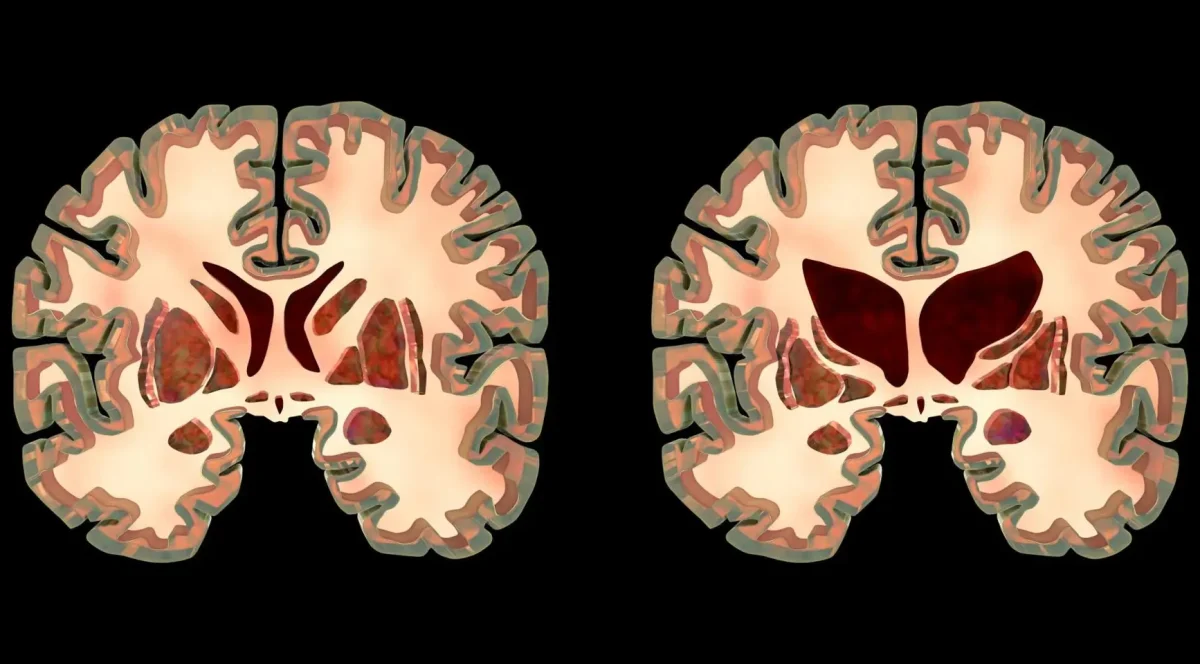










Huntington’s disease, one of the most tragic and fatal diseases that affects one in ten thousand US citizens a year, has finally received its first successful treatment. This brings hope to many with this life-threatening diagnosis, with 75% of the participants having slowed disease rate after intensive gene therapy. Many scientists describe huntingtons as one of the worst and cruelest diseases they’ve had to treat– But what is Huntington’s disease, and how does it work?
In 1916 Cairo, New York George Huntington died of pneumonia. His family weeps, as his last breaths are taken in his son’s house. The famous physician spent his life dedicating himself to the research of Huntington’s disease, named after his extensive research on the illness. Beginning from the age of 8, George noticed patterns in “hereditary chorea,” as the heir to a family of local doctors. His family has taken note of this strange disease for generations. By 1871, George graduated from Columbia University and began to compare his observations of “hereditary chorea,” with his new-found medical knowledge. In 1872, at the age of 22, he published “On Chorea,” a paper that described the extent of Huntington’s Disease so well that even hundreds of years later, the description remains mostly untouched from the original. Huntington was one of the first physicians to emphasize genetic dominance in a neurodegenerative disorder. His recognition of the autosomal dominant inheritance pattern would help future doctors identify similar diseases. His legacy is born onto the disease’s name, Huntington’s disease/chorea.
Huntington’s disease is a dominant gene disorder that causes nerve cells to decay over time. Social workers describe its effects as “the worst bits of Dementia, Parkinson’s and Motor Neurone Disease all rolled into one.” These symptoms include mental health disorders, such as suicidal thoughts, severe depression, and bipolar disorder. It causes severe movement disorders, with trouble swallowing, complications with speech, involuntary writing and jerking. Additionally, Huntington’s causes intense cognitive decay and rapid weight loss. One of the most heart breaking effects of this disease come from the fact that serious symptoms appear much later in life- in peoples 30’s-50’s, well after many victims have had kids. When diagnosed, the news is not only tragic for the adult, but for the children, as Huntington’s is a dominant gene disorder. The average life expectancy for a person with a Huntington’s diagnosis is 10-30 years. While the disease itself is not fatal, its symptoms weaken the body and mind, and could be potentially fatal.
UniQue is a gene therapy company that works on AAV-based gene therapy. AAV refers to a type of gene therapy that uses non harmful viruses to deliver different therapies. Its pipeline works on cures for Alzheimer’s, Fabry and Huntington’s disease. As of this September, UniQue has successfully developed an effective way of Gene therapy for huntingtons, which requires 12-18 hours of incredibly delicate brain surgery. The study, which involved 29 patients, showed that 3 years after the procedure, 75% of the disease was slowed, allowing the people to continue their cognitive, mental, and physical health needed for daily life. Around 75,000 people have Huntington’s disease in the UK, US and Europe with hundreds of thousands carrying the mutation meaning they will develop the disease. UniQure says it will try to apply for a license in the US, 2026 to launch the new drug.